

Doug Engelbart may have found it hard to solve his project’s identity crisis but ARPA in Washington had the same problem: they had trouble justifying to Congress their continued involvement in computer research. At an annual budget review, a Defense subcommittee called Larry Roberts on the carpet to ask how long this “experiment” was supposed to last, and why the hell the Pentagon was entering the field of office automation when IBM and Xerox, for starters, each had multimillion-dollar projects to do the same thing.
ARPA’s computer budget was cut. Overnight, it became anathema to mention office automation around the Arpanet.
Major projects were reabsorbed into Defense-related missions, and the SRI group was left high and dry. The researchers still made big speeches about knowledge workers, sounding more and more like a pack of wild dogs howling at the moon. Washington was no longer listening: Doug was in danger of losing his financial support. Simple tension grew into open conflict, and the project became stranger still.
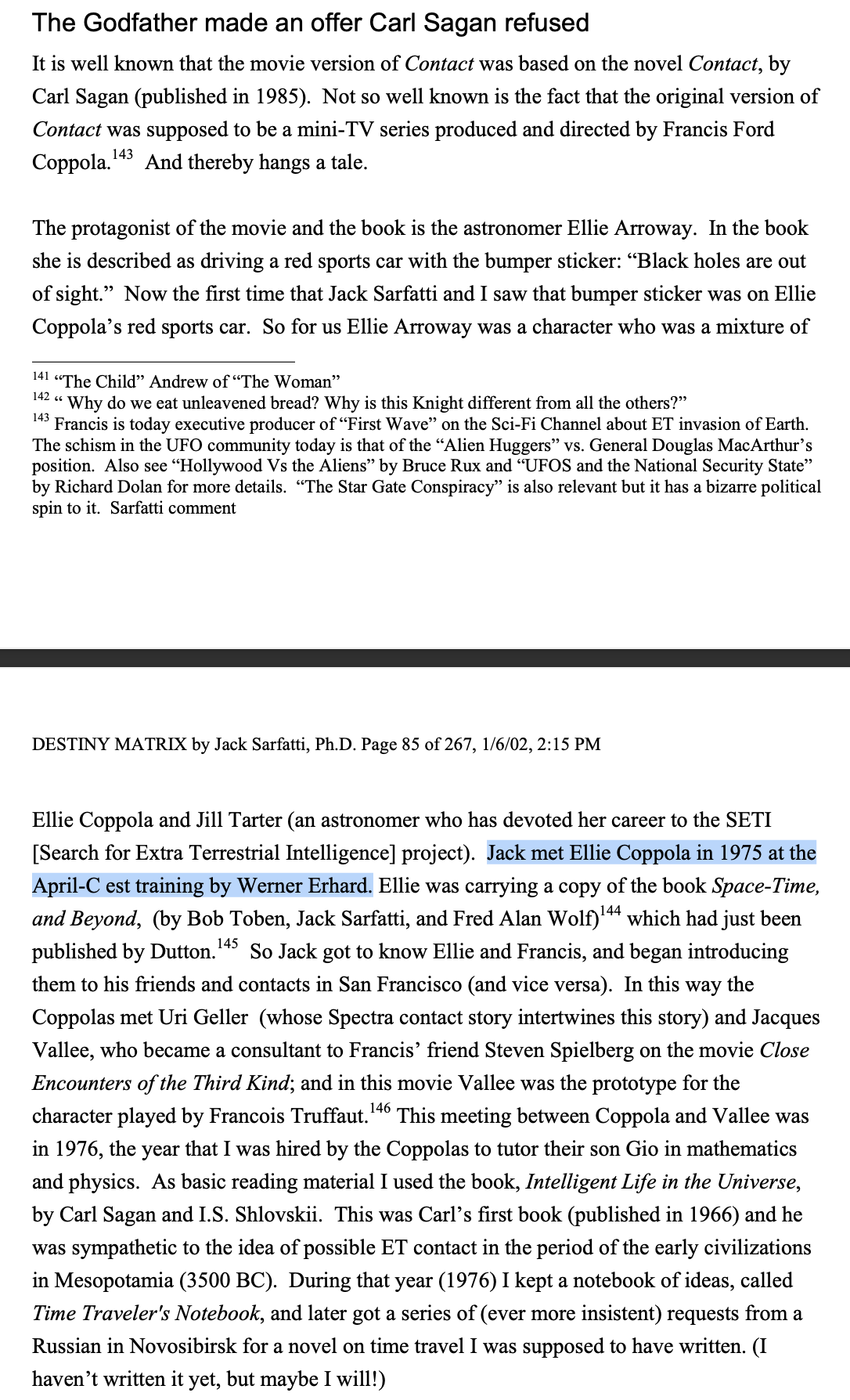
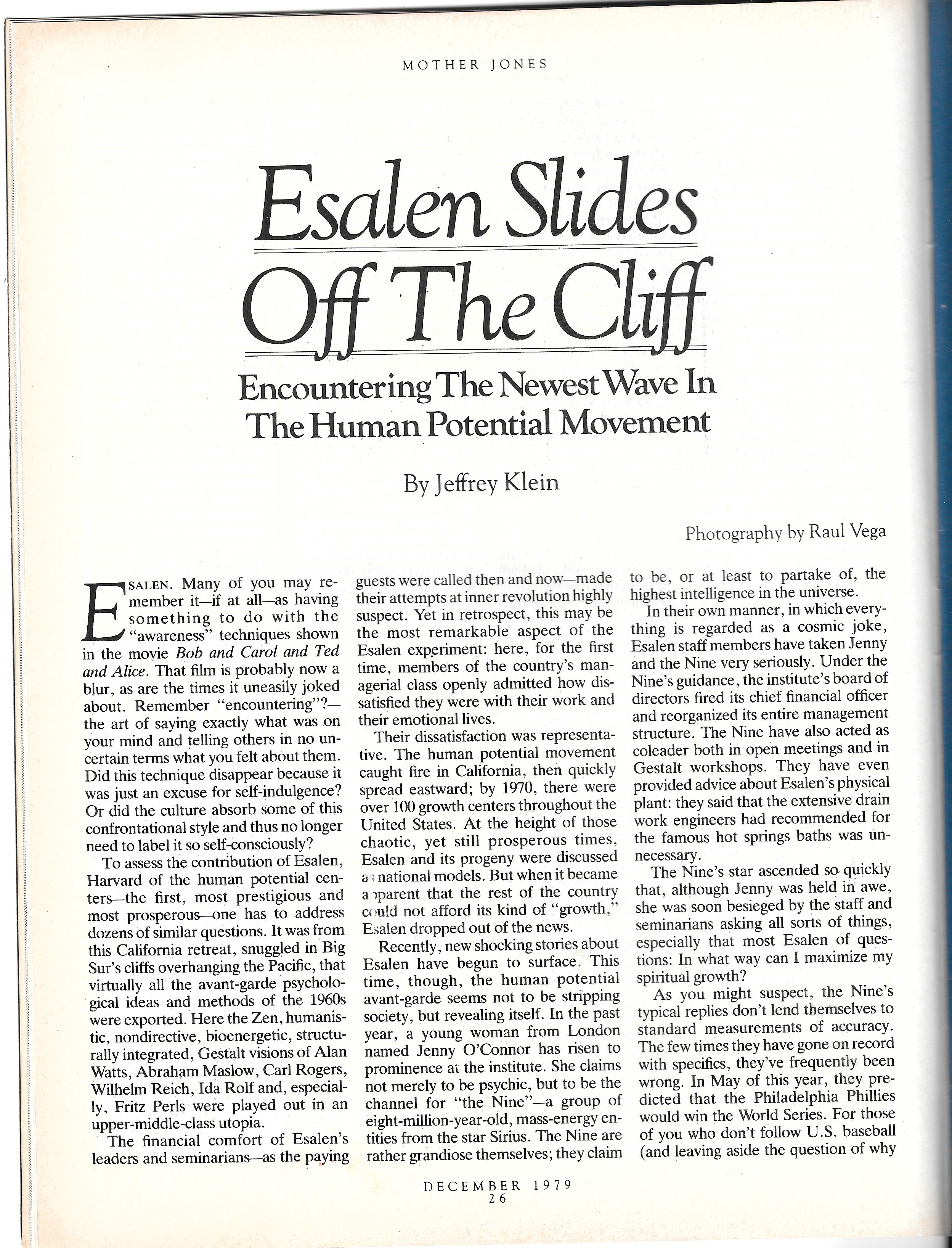
Engelbart had to do something to recapture his weakening leadership. A new fad was sweeping California, Silicon Valley no exception. It was a movement that superseded polarity therapy, Rolfing, Esalen, and even psychic healing. Doug embraced it as a timely solution to his problems. It was called “Erhard Seminar Training,” or EST.
Those who wandered from group to group, looking for cosmic truth, the veterans of the great drug explosion of 1968, the seekers who were forever finding and forever joining new movements, were finally engulfed by this absolute end to the search: they had seen the great light at last. Doug was among them. He sent his whole staff to take EST.
In my opinion, there was a good match between Engelbart’s vision at that time and the philosophy of John Paul Rosenberg, alias Werner Erhard. Doug’s work had been devoted to giving people a machine through which they could communicate and a language that would tolerate no ambiguity. Erhard was achieving control of the thousands who attended his seminars by a purely psychological technique and a single focus: his own word.
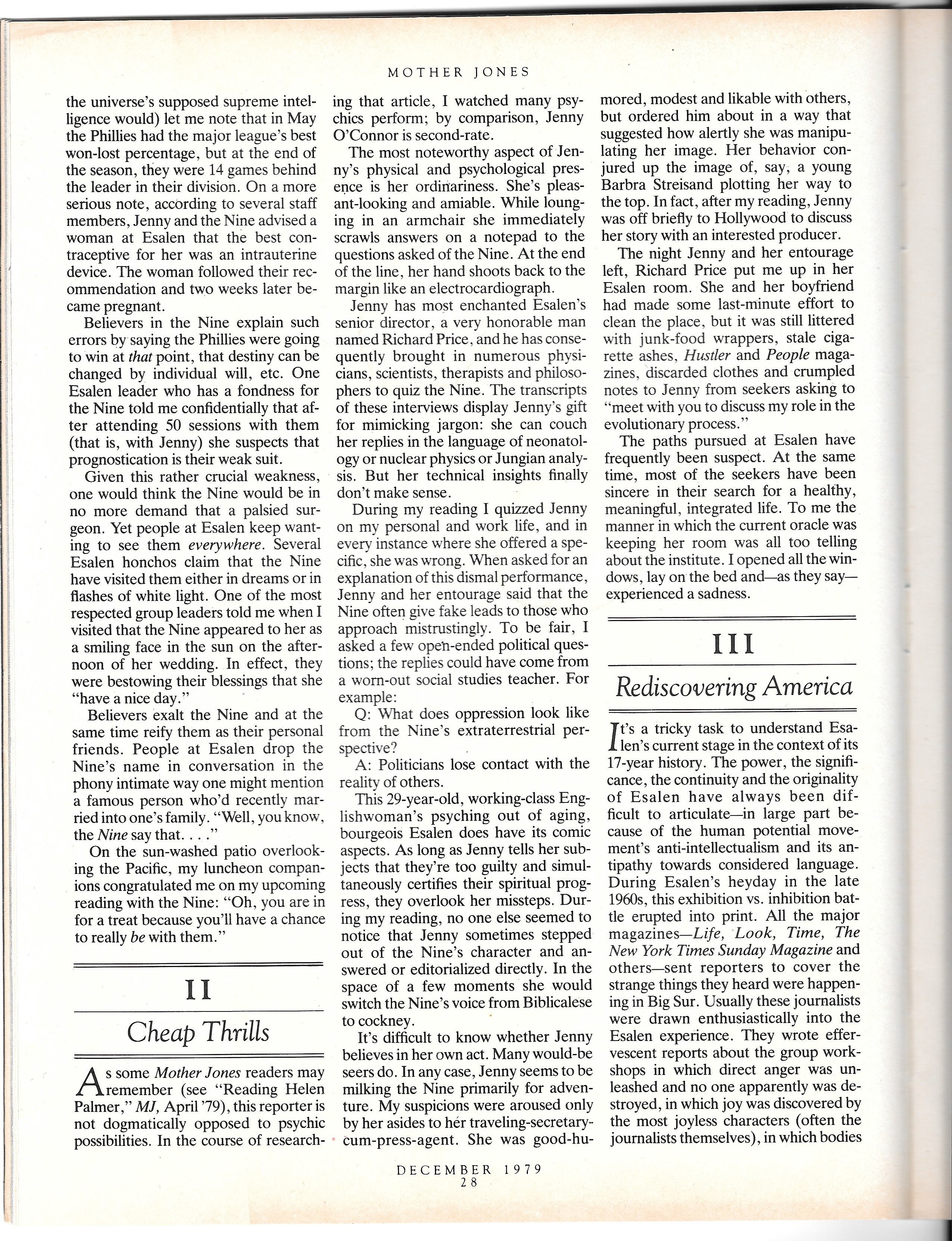
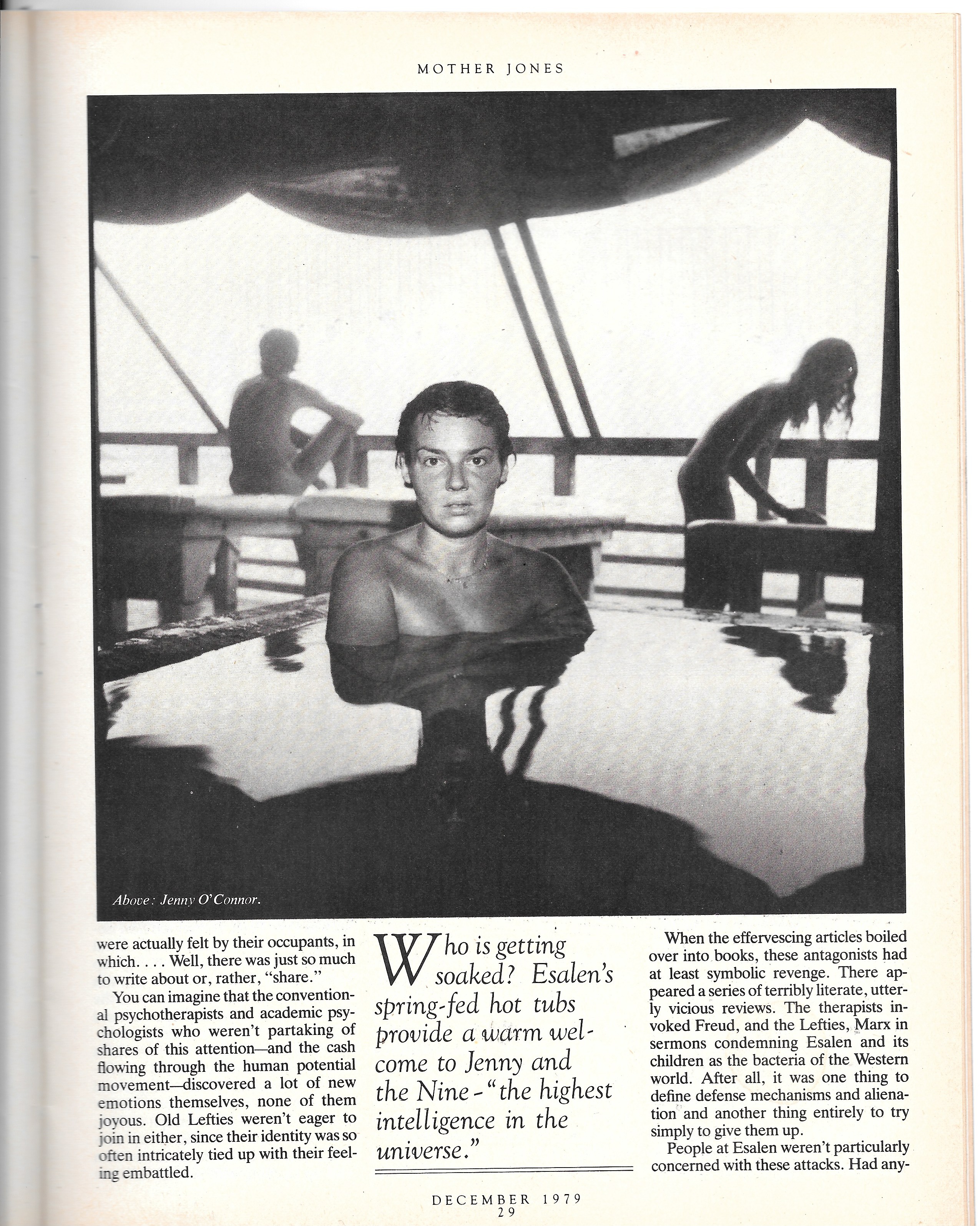
Doug was all intuition, and he mistrusted dialogue, but he was a master at controlling the channels of information. Erhard funneled everything through a single channel, and he was extremely good at words. This former salesman of the “positive thinking” school had carefully studied the movements of the New Age consciousness, from the hot baths of Esalen to the group exercises of Mind Dynamics. He packaged it all into an intense experience, even sprinkling in a little Zen and Scientology. It became an overnight success.
Taking two or three hundred people at a time—because it is much easier to control a group that size than a smaller one—the EST trainers would lock the meeting doors, physically cutting off access to the telephone, the candy machine, and the bathrooms, and denying their students the materialistic pleasures they had always counted on. The trainers then proceeded to break down their defenses, using standard techniques that amazed and disoriented the uninitiated. The EST trainers capitalized on their sense of failure. They would force people to recall the most humiliating experience of their lives and “share it” with the group. They would dismember them mentally, then put them together again like broken dolls.
The stories about Erhard’s sessions had interesting effects on the ARC group, over a month or so. First came the gentle suggestion, the subtle pressure for everyone to register for the seminars.
Nothing ever got done at SRI-ARC in those days without lengthy arguments. Doug himself rarely attended the meetings. They were run by his assistants sitting cross-legged on the floor, eating potato chips and drinking Coke. This was a way of expressing their identity, making it clear to the whole world that though they might be taking millions of dollars from the Defense Department to run their research, it would be wrong to confuse them with the lackeys of the Masters of War who worked on laser-guided bombs and who were recognizable by their ties, shiny shoes, and normal mealtime behavior. The ARC project was different, and they were going to prove it by enrolling in EST, a process about which they knew very little. The great mystery loomed above them, and it was their opportunity to solve their personal and group conflicts.
A dozen staff members caved in right away. They were ready for it. They had been calling for it silently. Their whole being welcomed it, their minds gave no resistance. They were professional people, for the most part, who accepted the blame for the current failure of the augmentation project. Since Doug could not be wrong, they themselves must have been unworthy of his great plan, they must have failed in the great mission he had given them. It never occurred to them that the project had become mired in the swamps of its own confusion, that it was losing touch with the mainstream of computer research.
These believers dived into EST like a group of travelers long lost in the desert, seeking salvation in the waters of some refreshing and mysterious river. When they came back to the office on Monday, it was hard to recognize them. What they had undergone was not just a simple attitude change, it was a transfiguration. They glowed, they floated, they hovered, they levitated. Nothing got done that day. They bathed for hours in the ebullience of their new spirit, and the others listened to their stories, which were couched in a peculiar new language that clearly eluded and excluded the rest of our group.
As soon as you began talking business with one member of the first wave of EST experiencers, you would be interrupted by another member who rushed over with some “space” to “share.” The two of them would start reminiscing about the deep, wonderful secrets of the past weekend. My reaction was to go away on tiptoe, like a profane tourist who, looking for the exit on the side of the cathedral, has stumbled upon a meeting of archbishops discussing the transubstantiation of the soul in Latin.
Other mysteries were implied by the proselytizers. They now knew how to be permanently happy. They had clothed themselves in an otherworldly glow. They would never be late for meetings again; they were going to be healthy forever. They had achieved a superhuman state and had sneezed their last sneezes.
The First Wave put so much pressure on the group that a second splinter began to come loose from ARC. To me, watching from the outside, EST had become like a wet blanket of conformity thrown over a nice team of gifted individuals trying to live out Doug’s genial dream. The augmentation idea had now been restructured to enclose even bigger and more inaccessible goals: universal happiness, permanently clear thought. Scientologists spend years and many thousands of dollars trying to get “clear”; EST covered the same ground in a few days for just two hundred and fifty bucks.
For those who had not yet taken EST (you said, “I’m taking EST” as you would say, “I’m taking five hundred milligrams of penicillin”), the pressure became unbelievable. For a while, it was constant bombardment from group members who had gone through the Mysteries and now had a stake in the outcome. The whole world must go through EST to be saved, it was explained to me, or at least the whole ARC project. If just a few black sheep like me refused to go, they said, that was enough to ruin the whole effort.
There was another reason as well, a hidden one. They had gone through the humiliation, the stripping, the public excision of their souls, the animectomy. They had been given invisible badges of genius in return for their debasement. Now the others had to do it, too, or suffer social rejection. That was the underlying rule of any initiation, any group secret. In spite of their participation in the country’s leading experiment in networking, the staff members at SRI were as vulnerable to this psychological pressure as any other group.
My status in the team was peculiar. I was from industry, like the more senior managers at ARC, but I was younger, and was known for my computer work among the peers of the hip programmers. EST wasn’t for me, although it was perfectly fine with me if they went to the seminars. I wasn’t perfect, I admitted, I didn’t think clearly at all times. I caught colds and was occasionally late for meetings, but I had my own standards and would work on my inadequacies without Erhard, thank you. So far as the rest of the project was concerned, the believers expected no organized resistance and they found none.
Instead, they found individuals who could stand on their own two feet and simply told them to get lost. This was a revelation to me. I discovered the strength and the resilience of some team members whose real spirit I had never suspected, and I was even grateful to EST for having revealed them. They were quite a group.
There was Cliff, who ran the network and was our main professional contact with the ARPA community, our gateway to Washington. He had a thorough knowledge of the protocols that kept the computer accessible, and he would have made an ideal recruit for EST. Unfortunately, he had already chosen his own spiritual discipline. He was studying the mystics and had no intention, he said, of spending hours listening to a bunch of pathetic materialists looking for two-hundred-and-fifty-dollar shortcuts to enlightenment (the fee went up shortly after).
Then there was Guru, a very talented programmer, a big man who had often displayed a tendency to insubordination. He resisted EST, and this came as a big surprise because he had long hair, wore the right kinds of clothes, kept a guitar in his office, and talked dirty. True, they could fire him, but he was the only one in the group who knew the computer’s operating system. If the software was not maintained regularly, it would collapse and NLS would crash. A delegation was sent into Guru’s office to put gentle pressure on him. After all, SRI was paying for half of the fee for EST, and if he was short of cash, maybe even that could be handled.
Guru told them that he had a nice curvaceous girlfriend in the hills and had “better things to do on Saturday than listening to a bunch of hustlers.” If they liked to pee in their pants in some sweaty meeting room in front of two hundred idiots, however, he wasn’t going to stop them. This particular style of domination didn’t turn him on, he said. “I’ve tried it and I didn’t like it.” He waved aside his shoulder-length black hair and returned to his computer terminal.
Charles was the next to refuse the proffered cup of EST bitterness and joy. He had long hair, too, in the hip fashion of the day, and he was the only remaining programmer from the team who had written the current version of the NLS program, so it was unthinkable to get rid of him. He came to the SRI on his bike whenever he pleased, got the work done, and went home. On his weekends he made furniture. His real goal in life was to become a woodcrafter. He smiled when invited to EST, and said in his soft-spoken way that he had a Louis XV chair to finish before he would consider anything like that.
Then there was Mil. She had the office next to mine. She was a strong, cheerful person, usually dressed in purple, and I knew why she picked that particular color and why she wore certain stones on certain days, because I had some knowledge of astrological lore. She had confided to me where the hexagrams were on the floor of her office, and her shelves were well stocked with the occult books of Manly Hall and Dion Fortune. When the computer crashed or when Doug got into one of his detestable moods, I went into Mil’s office; she gave me some herb tea, and she told me her thoughts on the tarot and the Holy Grail. She even had a scheme to run obscure cabalistic calculations on the SRI machine someday.
Mil had studied the esoteric traditions for many years, and she regarded that “kid Erhard” as one of those Werner-come-latelys who had missed the whole point about initiation.
The apostles of EST realized they were wasting their time trying to recruit us. The project conflicts deepened as time went on. The glow of the EST experience gradually wore off. ARPA threatened to cut off our funding again. People started coming to work late. And then one day, right in the middle of a staff meeting, Doug sneezed.